ResourcesEquipment & Special FreightAug 10, 20266 min read
Container Chassis 101: Types, Splits, Flips, and Who Pays
Chassis are separate from the container and the truck, and mixing them up is where drayage plans fall apart. Here's how pools, splits, flips, and chassis costs actually work.
A container move needs three separate pieces of equipment: the container itself, the truck that pulls it, and the chassis it rides on. Shippers usually think about the first two and forget the third exists — until a chassis shortage or a mismatched piece of equipment stalls a pickup at the port.
None of this is complicated once you see how it fits together. Knowing the basics of chassis types, splits, flips, and who actually pays for the chassis makes it much easier to plan a pickup that doesn't get stuck in the yard, and to ask your carrier the right questions before a move, not after.
The Chassis Isn't Part of the Container — or the Truck
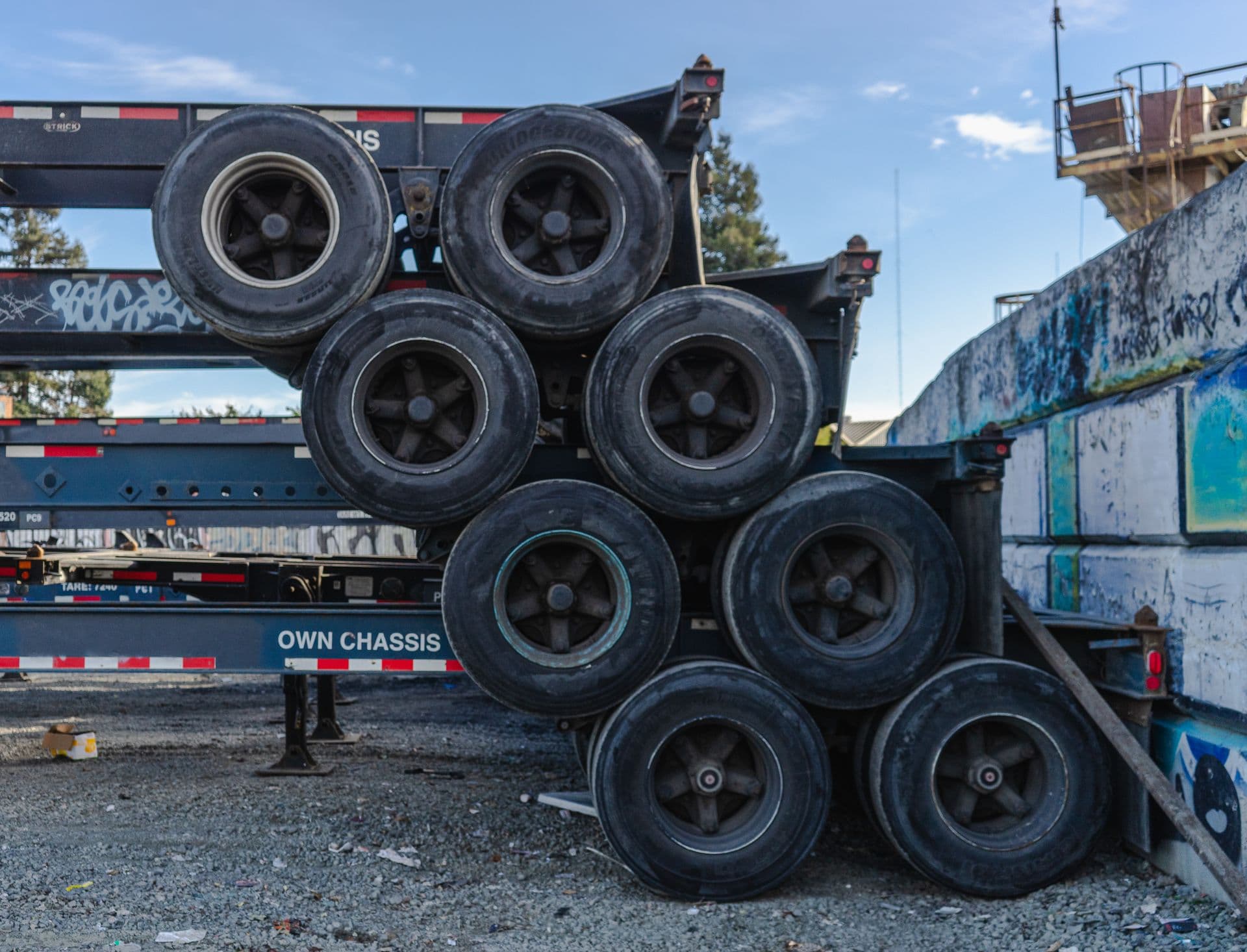
A shipping container is just a steel box. It has no wheels. To move by road, it has to be set down on a chassis — a wheeled steel frame with a locking mechanism (a twist-lock or pin) that secures the container in place. The truck's tractor then hooks onto the chassis, not the container.
At most major ports, chassis aren't owned by the steamship lines or by trucking companies. They're owned and maintained by chassis pooling companies, and carriers pull equipment from a shared pool when they arrive to grab a container. That pooled-equipment model is why chassis availability is its own variable in a move — separate from whether your container is discharged and separate from whether a driver is available.
Standard vs. Tri-Axle Chassis
A standard chassis has two axles and is built for the weight of a typical loaded 40-foot or 20-foot container within normal legal road limits. It's the default piece of equipment for the large majority of drayage moves.
A tri-axle chassis adds a third axle to spread the weight of the load across more points of contact with the road. That's what makes it possible to legally move a container that would otherwise exceed standard axle weight limits — the extra axle distributes the load rather than reducing it. If you're moving a heavy container, it's worth reading up on overweight container rules in California before you book, since permitting and routing both change once a load crosses the standard weight threshold. It isn't equipment every carrier keeps on hand or is set up to source on short notice.
What a "Split" Actually Means
In dispatch language, a split refers to decoupling the chassis from the container mid-move instead of running the same chassis round-trip. A common example: a driver delivers a loaded container to a customer, drops the container and chassis together, and then needs a different chassis to bring an empty container back to the port or rail ramp — rather than waiting for the original chassis to free up.
Splits happen for a lot of reasons: the customer needs the container to sit for unloading longer than the driver can wait, the return leg calls for a different chassis type, or the pool the driver picked up from doesn't have inventory at the drop location. None of this is unusual — it's routine equipment logistics — but it does mean a second piece of chassis inventory has to be available exactly when and where it's needed, which is one more thing that can go sideways on a tight schedule.
What a "Flip" Actually Means
A flip is different from a split. Flipping means physically lifting a container off one chassis and setting it down on another, usually at a yard, ramp, or terminal that has the lifting equipment to do it. A flip happens when the chassis under a container is the wrong type for what's ahead — for example, a container arrives on a standard chassis but turns out to be overweight and needs to move onto a tri-axle before it can legally hit the road, or a chassis is flagged as damaged or out of service (a "bad order" chassis) and has to be swapped before the move continues.
- 01The container's actual weight and destination requirements are confirmed against the chassis currently underneath it.
- 02If the chassis doesn't match — wrong axle count, damaged, or wrong pool — the container is identified for a flip rather than sent out as-is.
- 03A crane or lift moves the container off the mismatched chassis and onto a chassis that fits the load.
- 04The original chassis goes back into the pool (or into repair) and the move continues on the correct equipment.
Chassis Shortages and What They Do to Your Schedule
Chassis pools don't always have enough of the right equipment in the right place at the right time. Shortages tend to show up during import surges, around holidays when volume spikes, or when a disproportionate share of available chassis are tied up on containers that are sitting rather than moving.
- Import volume spikes faster than pool operators can reposition equipment to where it's needed.
- A high number of containers sit on chassis for days at a customer's dock, taking that equipment out of circulation.
- Tri-axle and other specialized chassis are a smaller slice of the pool, so they run short first.
- Empty chassis pile up at one location while another location runs dry, and repositioning takes time.
The practical effect of a shortage is dwell time — your container sits longer than planned because the equipment to move it isn't available yet. That has a direct relationship to demurrage and per diem exposure; if you haven't already, it's worth understanding how per diem and detention charges actually accrue, since a chassis shortage is one of the more common reasons a container blows past its free time through no fault of the shipper.
Who Pays for the Chassis
Chassis usage is typically billed as its own line item, separate from the linehaul or drayage rate — sometimes called a chassis fee or chassis rental. Tri-axle and other specialized chassis generally cost more to use than a standard chassis, reflecting the extra equipment and, often, extra permitting involved in the move.
Whether that cost is broken out separately or folded into an all-in quote depends entirely on how your carrier structures its pricing — there's no universal standard across the industry. The only way to avoid a surprise is to ask before the move, not after the invoice arrives. A good rate quote should spell out whether chassis charges are included or billed separately, and it's a fair question to raise directly with dispatch if a load looks like it might need specialized equipment.
The Avtar Freightways Take
Chassis sourcing, splits, and flips are dispatch's job, not yours — but the moves that go smoothly are the ones where the shipper flagged an overweight or unusual container up front instead of letting it surface as a surprise at the yard. Avtar Freightways (MC 1169424) coordinates chassis, including tri-axle equipment, for every move out of the Port of Oakland and Northern California rail ramps, with dispatch available 24/7 to sort out a split or flip before it costs you dwell time. Check our FAQ for more on how equipment coordination works.
A chassis is a separate piece of equipment with its own availability, its own weight ratings, and its own cost line — treating it as an afterthought is how containers end up stuck in a yard on a chassis that was never going to work for the load. If you're evaluating carriers for a lane that involves heavier or unusual containers, chassis handling is a fair thing to ask about directly; our guide on how to vet a drayage carrier walks through the questions worth asking before you commit a shipment.
Moving containers through Oakland?
Call (209) 459-5856 — dispatch answers 24/7 — or get a quote online.
Keep reading
Related guides

Ready when you are — 24/7
Have a container on the water?
Send the details before it hits the port. We'll have a truck, a chassis, and a plan waiting at the terminal.